
Past Perfect Continuous Tense – Rules, Uses & Examples
What is the Past Perfect Continuous Tense?
The Past Perfect Continuous Tense is used to talk about an action that started in the past, continued for some time, and stopped before another action in the past.
This tense focuses on:
Duration of the earlier action
What was happening before something else happened
It is especially useful when explaining cause and effect in the past.
Think of it as:
An ongoing action in the past that happened before another past action
Structure of the Past Perfect Continuous Tense
The basic structure is:
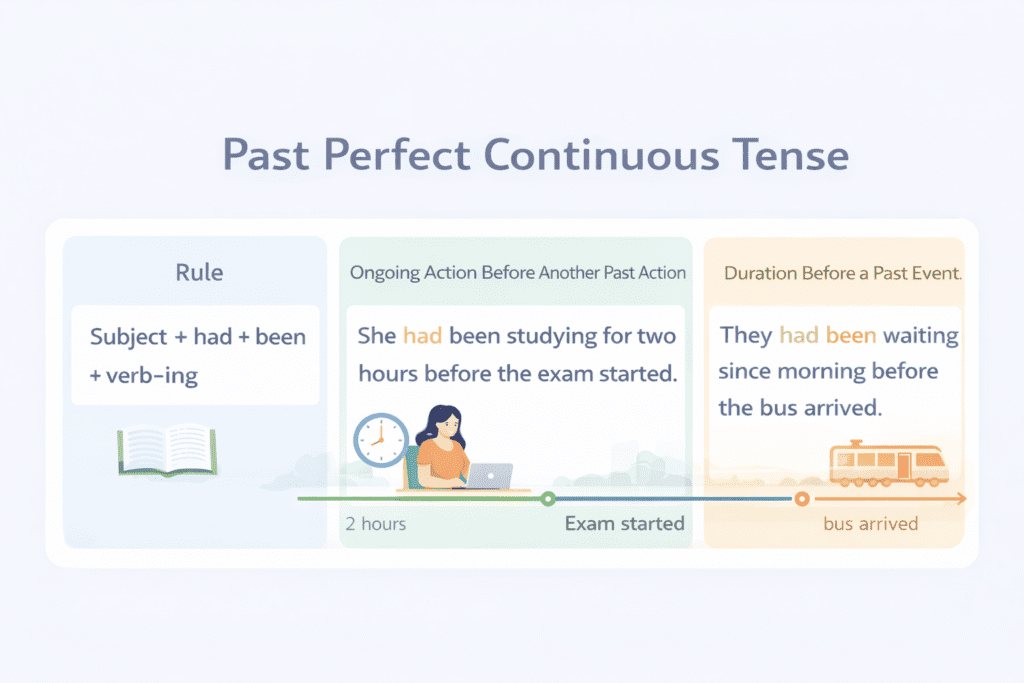
Subject + had + been + verb-ing
Examples:
I had been studying English before the exam started.
She had been working there for five years before she resigned.
They had been waiting for a long time before the bus arrived.
👉 “Had been” is used for all subjects.
Uses of the Past Perfect Continuous Tense
1. An Action That Continued for Some Time Before Another Past Action
This is the most common use.
The earlier, longer action → Past Perfect Continuous
The later action → Past Simple
Examples:
I had been learning English for two years before I joined the company.
She had been cooking for an hour before the guests arrived.
They had been playing outside before it started raining.
2. To Show Cause and Effect in the Past
Use this tense to explain why something happened in the past.
Examples:
He was tired because he had been working all day.
She was angry because she had been waiting for a long time.
We were happy because we had been preparing well.
3. To Emphasize Duration Before a Past Event
The focus here is on how long something was happening before another event.
Examples:
I had been studying for three hours before the exam began.
She had been living there for ten years before she moved.
They had been discussing the issue all morning before making a decision.
Sentence Forms
Affirmative Sentences
Subject + had + been + verb-ing
Examples:
I had been practicing grammar regularly.
She had been attending online classes.
They had been planning the trip.
Negative Sentences
Subject + had not + been + verb-ing
Examples:
I had not been feeling well.
She had not been listening carefully.
They had not been following the instructions.
Short form:
had not → hadn’t
Interrogative Sentences (Questions)
Had + subject + been + verb-ing?
Examples:
Had you been studying before the test?
Had she been working late?
Had they been waiting long?
Wh-Questions
Wh-word + had + subject + been + verb-ing?
Examples:
How long had you been learning English?
Why had she been crying?
What had they been doing before you arrived?
Common Time Expressions Used
for
since
before
all day
all week
all morning
Examples:
I had been working since morning.
She had been studying for three hours.
They had been waiting all evening.
Common Mistakes to Avoid
❌ I had been studied English before the interview.
✅ I had been studying English before the interview.
❌ She had been work there for years.
✅ She had been working there for years.
❌ Had you been do this work?
✅ Had you been doing this work?
Past Perfect vs Past Perfect Continuous
| Past Perfect | Past Perfect Continuous |
|---|---|
| Focus on result | Focus on duration |
| “I had finished” | “I had been working” |
| Completed action | Ongoing past action |
Example Comparison:
I had finished my homework before dinner.
I had been doing my homework for two hours before dinner.
More Examples for Practice
I had been improving my pronunciation.
She had been preparing for the interview.
We had been practicing spoken English daily.
They had been saving money for months.
Quick Summary
Used for actions that continued before another past action
Structure: had + been + verb-ing
Emphasizes duration
Often used with for, since, before
✅ Tip for Learners
If you want to explain how long something was happening before another past event, use the past perfect continuous tense.