
English Vocabulary for Indian Weddings and Social Events: How to Talk About Indian Traditions in English
You know these ceremonies inside out — in Hindi. This guide gives you the English vocabulary, phrases, and scripts to describe them confidently to anyone.
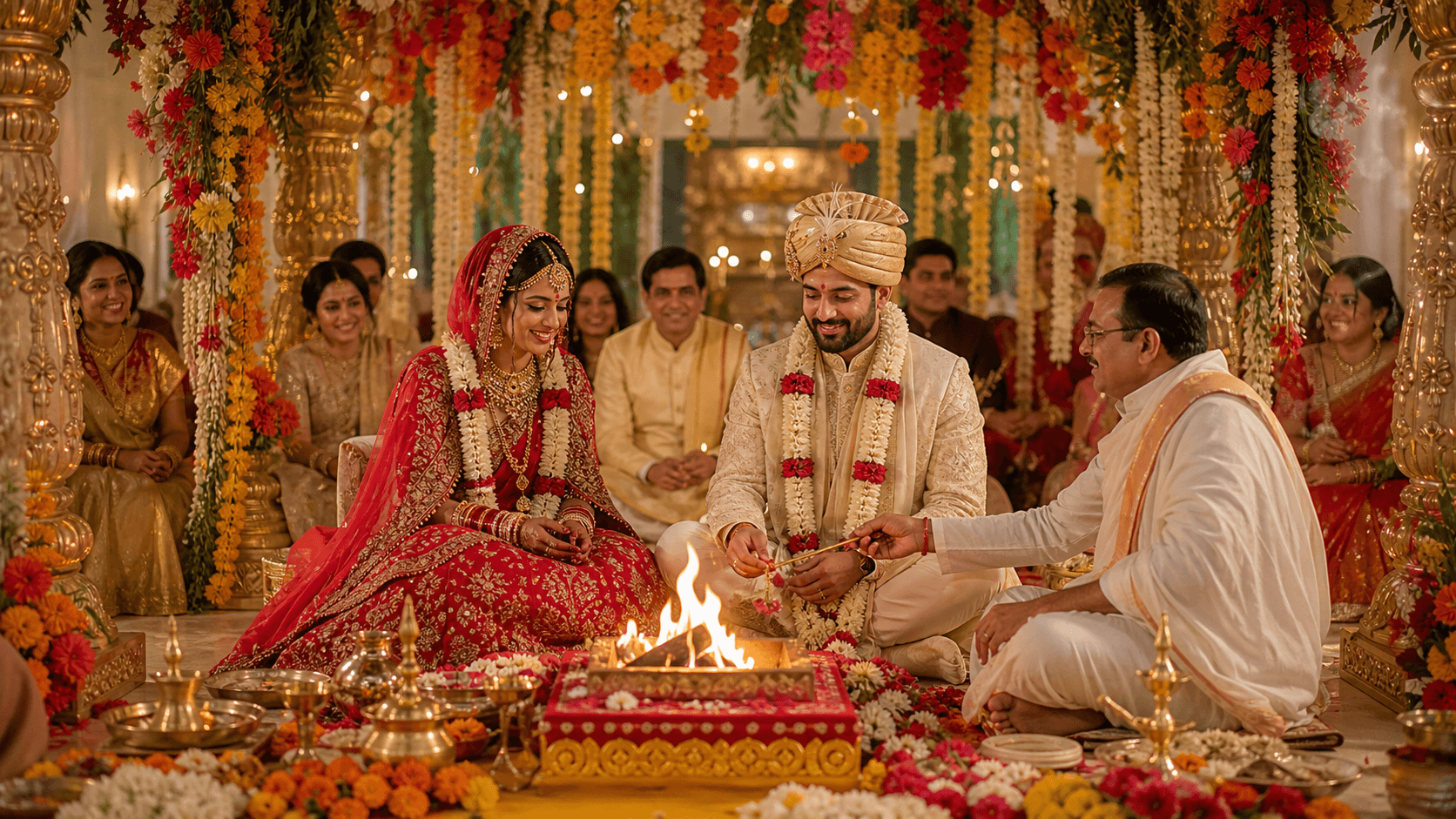
You are sitting with an international colleague, a foreign client, or an English-speaking friend who has been invited to a family wedding. They ask you: "So what exactly happens at a Sangeet?" You know the answer perfectly — in Hindi. But finding the right English words to explain it clearly, warmly, and confidently? That is where many Indian speakers hesitate.
Or consider this: you are at a professional networking event and someone asks how your weekend was. You spent it at a cousin's Haldi ceremony. How do you describe that experience in English in a way that is natural, engaging, and easy for a non-Indian listener to understand?
This guide gives you exactly that — the English vocabulary, phrases, and scripts you need to talk about Indian weddings and social events confidently. Whether you are explaining ceremonies to a non-Indian guest, writing a message in English to wish a couple, or simply having a conversation about Indian culture in an English-speaking setting, every section of this guide is built for practical use.
English Vocabulary for Indian Weddings and Social Events
To talk about Indian weddings and social events confidently in English, you need three things: the correct names and clear explanations for each ceremony (Roka, Haldi, Sangeet, Pheras, Vidaai), ready-to-use phrases for wishing couples and explaining rituals to non-Indian guests, and awareness of common Indianisms to replace with standard English. This guide covers all three — with tables, scripts, and sample conversations for every situation.
- Why Talking About Indian Social Events in English Is a Unique Challenge
- Section 1 — Pre-Wedding Ceremonies: English Vocabulary and Explanations
- Section 2 — The Wedding Ceremony: Key Terms and How to Explain Them
- Section 3 — Post-Wedding Ceremonies: Explaining the Farewell and After
- Section 4 — Other Indian Social Events: How to Describe Them in English
- Section 5 — Ready-to-Use English Phrases for Indian Social Occasions
- Section 6 — Common Indianisms in Social English and the Standard Alternatives
- Section 7 — Sample English Conversations About Indian Social Events
- How to Build This Vocabulary Into Your Everyday English
- Final Thoughts
Why Talking About Indian Social Events in English Is a Unique Challenge
Most English vocabulary guides focus on professional settings — meetings, emails, client calls. But social English is equally important, and for Indian speakers it comes with a specific challenge: many of our most important social occasions have no direct English equivalent.
There is no single English word for Vidaai. There is no standard English translation for Kanyadaan that captures its full cultural meaning. And phrases like "the boy's side" and "the girl's side" — completely natural in Indian English — can confuse someone unfamiliar with how Indian wedding arrangements work.
The solution is not to replace Indian terms with approximate English ones. It is to learn how to explain them clearly, add context naturally, and weave them into English conversation in a way that is both accurate and engaging.
Section 1: Pre-Wedding Ceremonies — English Vocabulary and Explanations
Indian weddings typically span several days with distinct pre-wedding events. Here is how to name, explain, and talk about each one in English.
| Indian term | What it means | How to explain it in English |
|---|---|---|
| Roka | The first formal meeting of both families to confirm the match — similar to an engagement announcement | "The Roka is the ceremony where both families officially agree to the marriage. It is the first formal celebration — think of it as the starting point of all the wedding events." |
| Sagai / Ring ceremony | The exchange of rings between the couple, similar to a Western engagement ceremony | "The Sagai is our engagement ceremony — the couple exchanges rings in the presence of both families." |
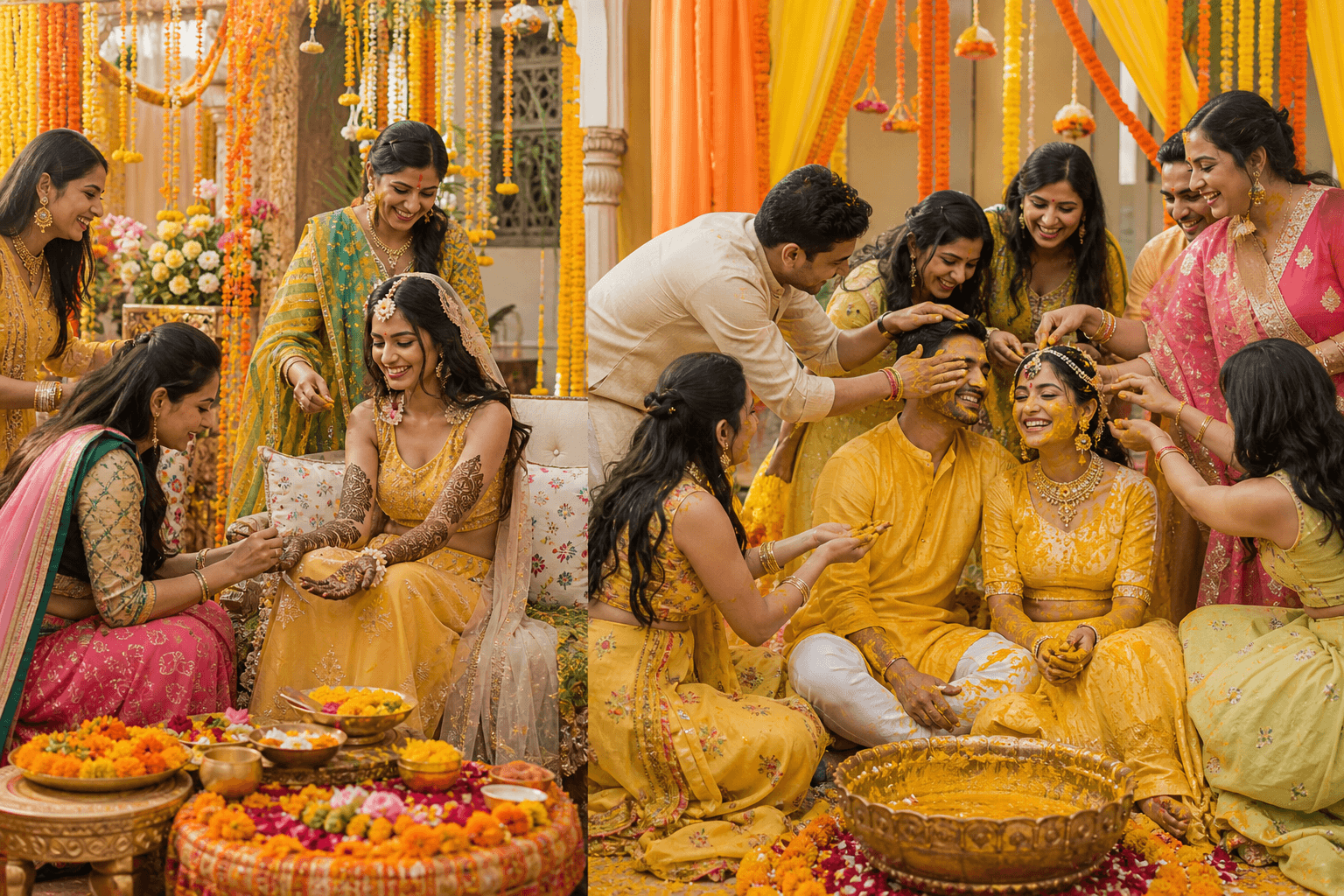
| Haldi | A pre-wedding ritual where turmeric paste is applied to the bride and groom by family members | "The Haldi is a joyful pre-wedding ceremony where family members apply a turmeric paste to the bride and groom. It is believed to bring a natural glow and good luck before the wedding day." |
| Mehendi / Mehndi | The henna ceremony where intricate designs are applied to the bride's hands and feet | "Mehendi is the henna ceremony — an artist applies beautiful, intricate patterns on the bride's hands and feet. Female guests usually get Mehendi applied on their hands too." |
| Sangeet | A musical evening of singing and dancing, held before the wedding — usually by both families | "The Sangeet is a music and dance celebration held the evening before the wedding. Both families perform songs and dances — it is one of the most festive events of the whole wedding." |
| Chooda ceremony | A Punjabi tradition where the bride's maternal uncle presents her with red and white bangles | "The Chooda ceremony is a Punjabi tradition where the bride receives a set of red and white bangles from her maternal uncle. She wears them throughout the wedding and typically for 40 days after." |
| Baraat | The groom's wedding procession — the groom and his family and friends arrive at the wedding venue dancing | "The Baraat is the groom's procession. The groom arrives at the wedding venue with his family and friends — there is music, dancing, and a lot of celebration on the way in." |
Section 2: The Wedding Ceremony — Key Terms and How to Explain Them
The wedding ceremony itself is rich with rituals, each of which has a meaning that is worth explaining when speaking in English. Here are the most important ones.
| Indian term | What it means | How to explain it in English |
|---|---|---|
| Mandap | The decorated ceremonial canopy or altar under which the wedding takes place | "The Mandap is the sacred canopy set up at the wedding venue — it is the altar where the ceremony takes place. It is usually elaborately decorated with flowers." |
| Pheras / Saptapadi | The seven vows the couple takes while walking around the sacred fire | "The Pheras are the seven rounds the bride and groom take around a sacred fire, each round representing a different vow — like a promise of love, loyalty, and support. This is the heart of a Hindu wedding ceremony." |
| Varmala / Jaimala | The exchange of flower garlands between the bride and groom at the start of the ceremony | "The Varmala is the garland exchange — the couple places flower garlands around each other's necks as a sign of acceptance. It marks the beginning of the wedding ceremony." |
| Kanyadaan | The ritual where the bride's parents formally give her hand in marriage | "Kanyadaan is one of the most emotional moments of a Hindu wedding — the bride's parents formally give their daughter's hand in marriage. It is considered one of the greatest acts a parent can perform." |
| Sindoor | The red vermilion powder applied by the groom to the bride's hair parting, symbolising that she is now married | "Sindoor is a red powder that the groom applies to the parting of the bride's hair during the ceremony. It is a symbol of marriage — a bit like a wedding ring in Western culture." |
| Mangalsutra | The sacred necklace the groom ties around the bride's neck, symbolising their union | "The Mangalsutra is a sacred necklace tied by the groom around the bride's neck during the ceremony. It is the Indian equivalent of a wedding ring — a symbol of their lifelong commitment." |
| Milni | The formal meeting and exchange of garlands between key male members of both families | "The Milni is a ceremony where senior male members of the bride's and groom's families formally greet each other and exchange garlands. It is a way of welcoming the groom's family." |
Section 3: Post-Wedding Ceremonies — Explaining the Farewell and After
Post-wedding ceremonies are among the most emotionally significant events of an Indian wedding. Here is how to talk about them in English.
| Indian term | What it means | How to explain it in English |
|---|---|---|
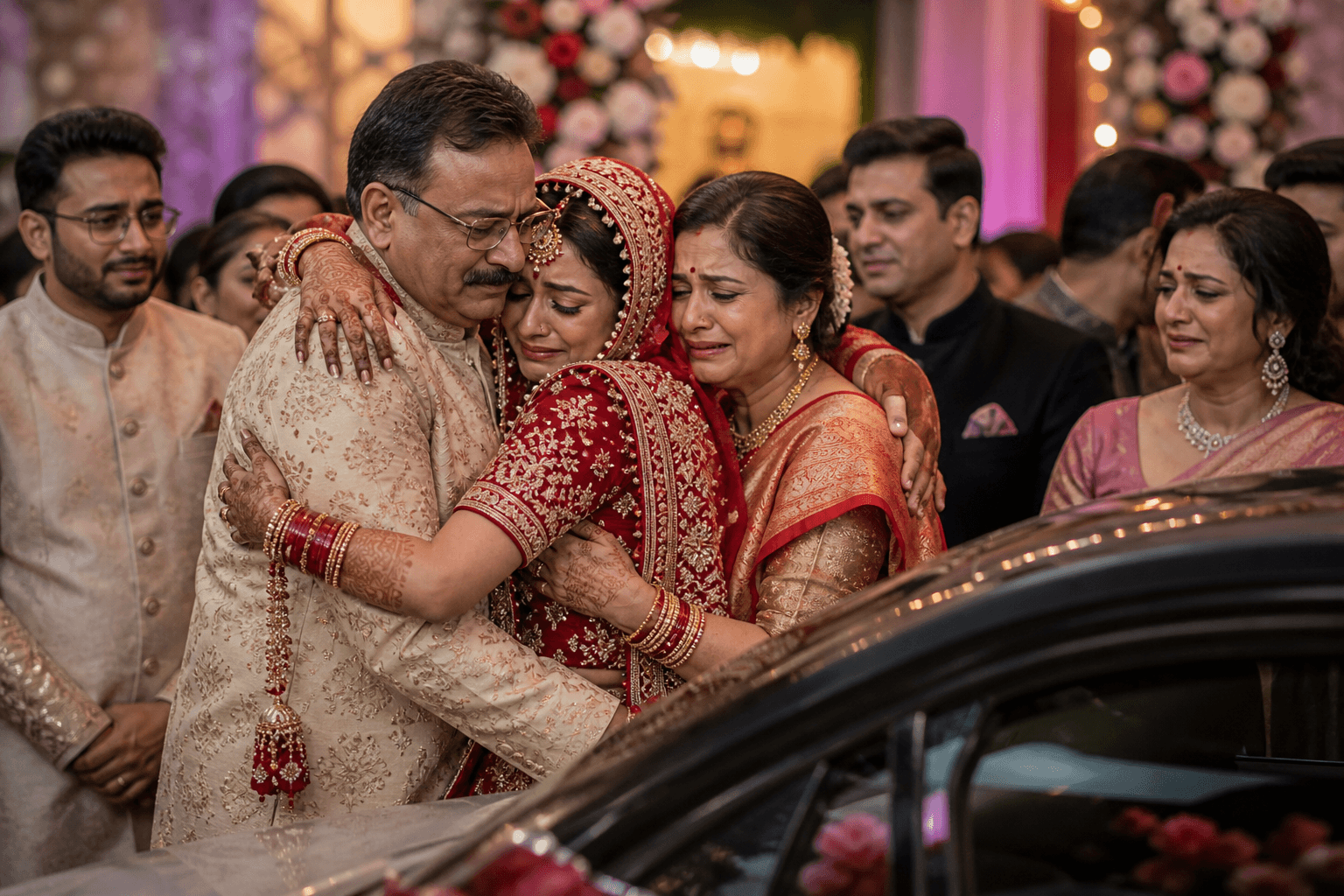
| Vidaai | The bride's emotional farewell from her family home after the wedding | "The Vidaai is the bride's farewell from her family. After the wedding, she leaves her parental home to begin her new life. It is usually a very emotional moment for the whole family." |
| Grihapravesh | The bride's formal welcome into the groom's home for the first time | "Grihapravesh is the ceremony where the bride enters her new home for the first time. She is welcomed by the groom's family with rituals and prayers — it marks the official beginning of her life in the new household." |
| Reception | The post-wedding celebration where the couple receives guests and blessings | "The reception is the wedding party held after the ceremony — usually in the evening. The couple greets guests, there is food, music, and dancing, and it is often the biggest celebration of the wedding." |
| Pagphere / Muklawa | The tradition where the bride returns to her parental home for the first time after the wedding | "After the wedding, the bride traditionally makes her first visit back to her parents' home. This is called Pagphere — it is an emotional and joyful reunion, and the bride is welcomed back warmly by her family." |
Section 4: Other Indian Social Events — How to Describe Them in English
Indian social life extends well beyond weddings. Here is vocabulary for other important occasions you may need to describe or discuss in English.
| Indian term | What it means | How to explain it in English |
|---|---|---|
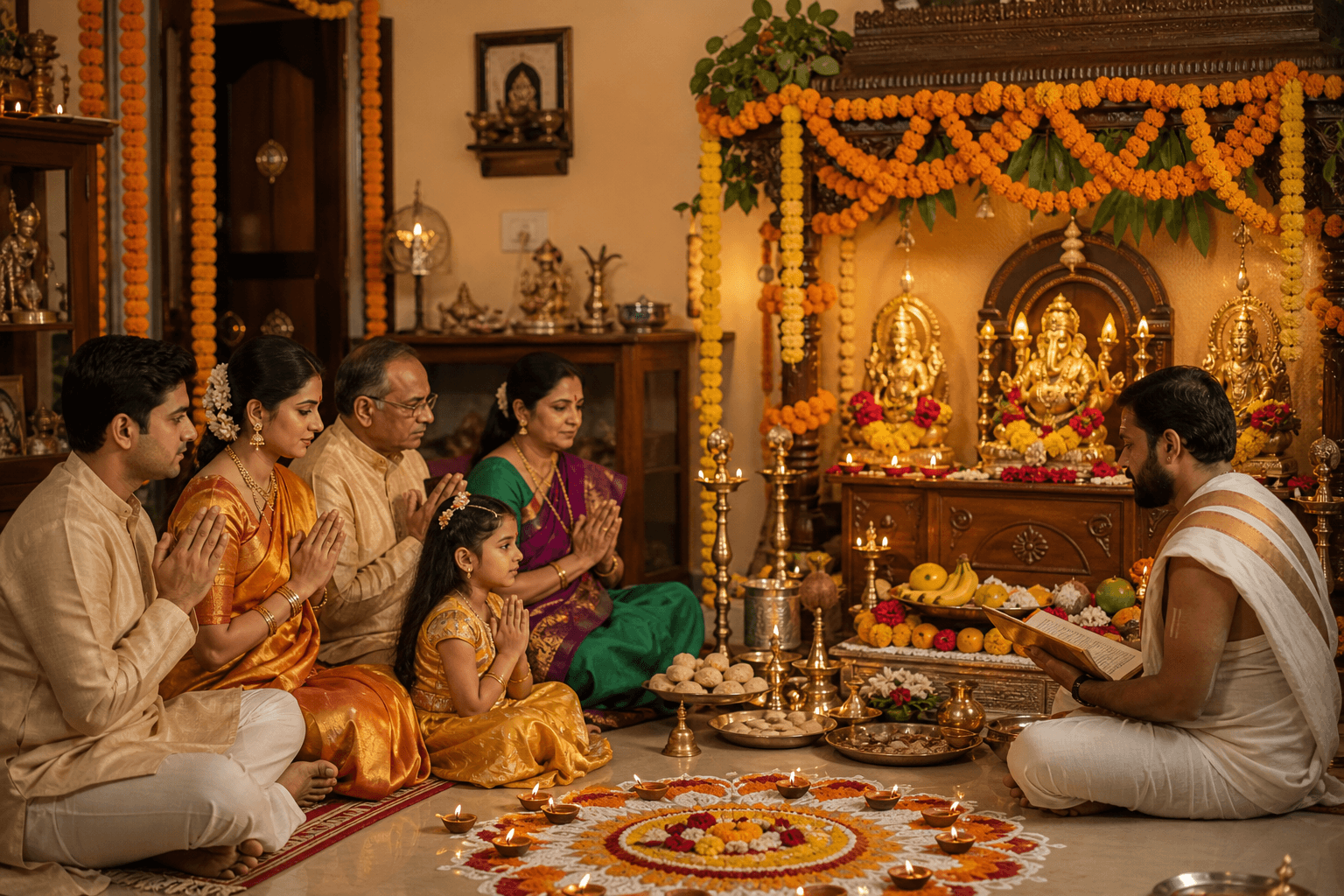
| Puja / Pooja | A religious prayer ceremony performed at home or at a temple for various occasions | "A Puja is a religious ceremony — it can be held at home or at a temple. It involves offering prayers, flowers, and sweets to a deity. We hold Pujas for many occasions — festivals, new beginnings, or simply as a regular act of worship." |
| Ganesh Puja / Satyanarayan Katha | Specific types of religious prayer ceremonies held for good luck or thanksgiving | "A Satyanarayan Katha is a specific type of prayer ceremony held to seek blessings for a new beginning — like moving into a new home or after a wedding. It involves reading from scriptures and offering prayers." |
| Namakaran | The naming ceremony held for a newborn baby | "Namakaran is the baby naming ceremony — a celebration held when a newborn is officially given their name. Family and friends gather, prayers are offered, and the baby's name is announced." |
| Mundan | The head-shaving ceremony for a young child, considered auspicious | "The Mundan is a ceremony where a young child's head is shaved for the first time. It is considered an auspicious milestone — the old is removed to make way for the new." |
| Annaprashan | The rice-feeding ceremony for a baby — the first time solid food is given | "Annaprashan is the ceremony where a baby is given solid food for the first time — usually rice. It is a family celebration marking an important milestone in the child's early life." |
| Griha Pravesh | The housewarming ceremony when moving into a new home | "Griha Pravesh is the housewarming ceremony. When Indians move into a new home, they perform prayers and rituals to bless the space before settling in. It is similar to a housewarming party but with a religious component." |
| Thread ceremony / Janeu / Upanayana | A coming-of-age ceremony for boys in certain Hindu communities | "The thread ceremony, also called Janeu or Upanayana, is a coming-of-age ritual for boys in certain Hindu communities. A sacred thread is tied around the boy's body, symbolising his spiritual responsibilities." |
Want to Practise Talking About These Topics in Real English Conversation?
At PracticeEnglish.online, our coaches create sessions around exactly these kinds of real-life situations — social events, cultural explanations, professional small talk. Speak confidently today.
Join a Free Practice SessionSection 5: Ready-to-Use English Phrases for Indian Social Occasions
Knowing the vocabulary is one thing. Knowing how to use it in natural, flowing conversation is another. Here are the specific phrases you need for the most common social situations.
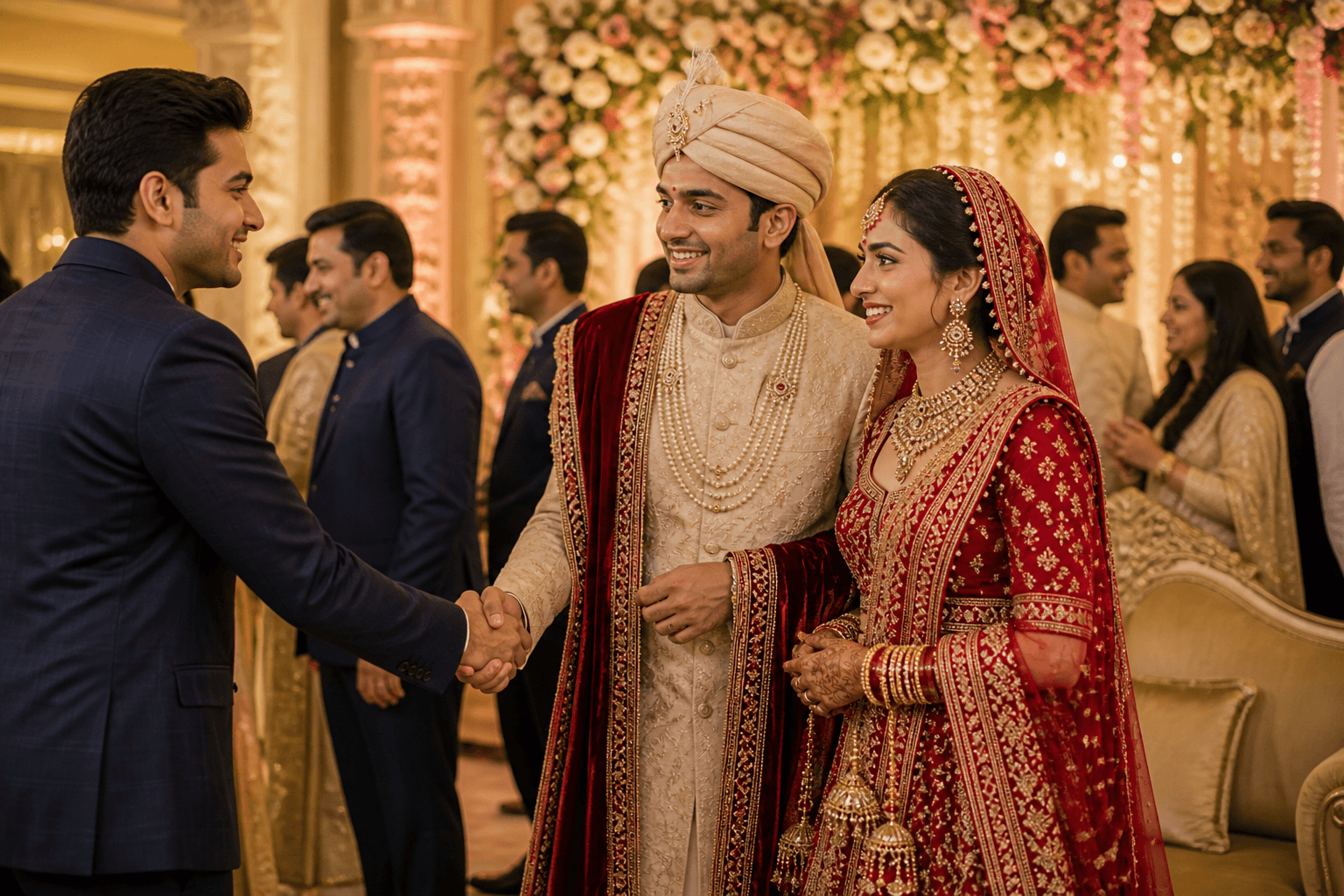
Wishing Someone at a Wedding
| Situation | What to say in English |
|---|---|
| General wedding wish | "Congratulations to you both! Wishing you a lifetime of happiness together." |
| To the parents | "Congratulations on your daughter's / son's wedding. This must be such a joyful day for your family." |
| After the ceremony | "The ceremony was absolutely beautiful. You both look wonderful." |
| At the reception | "Thank you so much for having me. The food is wonderful and the celebrations have been incredible." |
| To a friend getting married | "I am so happy for you. You are going to be a wonderful partner. Congratulations!" |
Explaining Indian Wedding Events to a Non-Indian Guest
| Situation | What to say in English |
|---|---|
| Explaining the Sangeet | "Tonight is the Sangeet — it is essentially a big music and dance party the night before the wedding. Both families perform songs and dances for each other. Think of it as the Indian version of a rehearsal dinner, but much louder and more fun." |
| Explaining the Haldi | "The Haldi is a turmeric ceremony — family members apply a yellow paste to the bride and groom. It is playful and intimate, usually just close family. Wear something you do not mind getting yellow on." |
| Explaining the Pheras | "The Pheras are the seven vows the couple takes while walking around a sacred fire. Each round represents a different promise they are making to each other. It is the most sacred part of the ceremony." |
| Explaining the Vidaai | "The Vidaai is the bride's farewell from her family home. She leaves with the groom to begin her new life. It is usually very emotional — the bride throws rice over her shoulder as a symbol of leaving prosperity behind for her family." |
| Explaining the Baraat | "The Baraat is the groom's arrival procession. He comes to the wedding venue with his family and friends, usually on a horse or in a decorated car, with music and dancing. It is very celebratory." |
Talking About a Wedding or Social Event in Conversation
| Situation | What to say in English |
|---|---|
| Telling a colleague about a wedding | "I was at my cousin's wedding this weekend — it was a four-day celebration. We had the Mehendi on Thursday, the Sangeet on Friday, the ceremony on Saturday, and the reception in the evening." |
| Describing the Haldi to someone unfamiliar | "I spent Sunday at a Haldi ceremony for my friend — it is a pre-wedding ritual where turmeric paste is applied to the bride and groom. It sounds unusual but it is actually a really joyful, intimate gathering." |
| Inviting a colleague to a wedding event | "We are having a Sangeet at our home on Friday evening — it is a music and dance event before the wedding. You are very welcome to join us if you are free." |
| Responding when asked about Indian festivals | "Diwali is our English vocabulary for festivals — it is one of the biggest festivals in India. Families light lamps, exchange sweets, burst firecrackers, and spend the evening together. It is a bit like Christmas in terms of how widely it is celebrated." |
Section 6: Common Indianisms in Social English — and the Standard Alternatives
Even in casual social conversation, certain Indian English phrases can confuse non-Indian listeners or sound unusual in an international context. You can read more about common Indianisms to avoid in our dedicated guide. Here are the most common ones in social situations with standard alternatives.
| What Indians often say | Standard English alternative | Context |
|---|---|---|
| "We are doing the Ganesh Puja tomorrow" | "We are holding a Ganesh Puja tomorrow" or "We have a prayer ceremony tomorrow" | "Doing" a ceremony sounds informal. "Holding" or "having" is more natural. |
| "The boy's side / the girl's side" | "The groom's family / the bride's family" | Standard English uses bride and groom, not boy and girl. |
| "She got married off" | "She got married" or "Her wedding took place" | "Married off" has a negative connotation in standard English — avoid it. |
| "We will have a function at home" | "We are hosting a ceremony / celebration at home" | "Function" for a social event is an Indianism not widely used elsewhere. |
| "Auspicious occasion" | "A special occasion" or simply name the event | Auspicious is correct English but overused in Indian contexts — it can sound overly formal. |
| "We are blessed with a baby boy" | "We have a newborn baby boy" or "She has had a baby boy" | Both are correct, but the standard phrasing sounds more natural in conversation. |
| "Kindly attend the reception" | "Please join us at the reception" or "We would love for you to attend" | "Kindly" is overly formal for a social invitation in standard English. |
Section 7: Sample English Conversations About Indian Social Events
Reading vocabulary is passive. To use it actively, you need to see it in natural conversation. Here are two sample dialogues you can study and adapt.
Colleague: "So you were out on Friday — anything special?"
You: "Yes, I was at my cousin's Sangeet — it is a music and dance celebration we hold the evening before a wedding. Both families come together and perform songs and dances for each other. It was really festive."
Colleague: "Oh, that sounds lovely! Is the wedding today then?"
You: "Yes, the ceremony is this evening. The wedding itself will be held under a Mandap — that is the decorated canopy set up for the ceremony. The couple will take seven vows around a sacred fire. It is quite beautiful."
Colleague: "That sounds amazing. Are you involved in any of the rituals?"
You: "As part of the bride's family, I will be involved in the Vidaai — that is the farewell ceremony when the bride leaves her family home to begin her new life. It is usually very emotional but also very meaningful."
Manager: "How was your weekend?"
You: "It was wonderful, thank you — I was at a family wedding. It was a three-day celebration. The first evening was the Sangeet — essentially a big dance and music party. The second day was the main ceremony, and the third was the reception."
Manager: "Three days! That sounds like quite a celebration."
You: "Indian weddings typically span several days — each event has its own mood and rituals. The ceremony itself was beautiful. The couple took seven vows around a sacred fire — it is the most significant part of a Hindu wedding."
Manager: "That is fascinating. Did you have a good time?"
You: "Absolutely. The food was incredible and the dancing went on until midnight. It was exhausting but wonderful."
How to Build This Vocabulary Into Your Everyday English
The phrases and explanations in this guide are most useful when they feel natural — not rehearsed. Here is how to get there:
- Explain one ceremony a week to someone: Pick one term from this guide — Sangeet, Haldi, Vidaai, or any other. Explain it out loud in English as if you are describing it to a non-Indian friend. Time yourself. Aim for 30 seconds. Repeat until it flows naturally.
- Write it before you say it: Before the next wedding or social event you attend, write a short English description of each ceremony that will take place. This prepares you to answer questions confidently when non-Indian guests or colleagues ask.
- Use social events as speaking practice: Every time you describe a festival, a ceremony, or a family event in English — to a colleague, a client, or an international contact — you are building exactly the kind of natural, cultural vocabulary that makes your English richer and more engaging. The skills you build here connect directly to the daily English conversations you have at work every week.
- Learn the phrase, not just the word: Do not just memorise "Vidaai means farewell." Learn the full explanation: "The Vidaai is the bride's farewell from her family home — it is usually very emotional and one of the most meaningful moments of the entire wedding." The full phrase is what makes you sound fluent.
Final Thoughts: Your Culture Is Your Advantage
Indian weddings and social events are among the most vibrant, layered, and meaningful celebrations in the world. When you can describe them confidently in English — with the right vocabulary, warm explanations, and natural phrasing — you do not just communicate information. You share culture.
Non-Indian colleagues, clients, and friends who hear you describe a Sangeet, explain the significance of the Pheras, or talk about the emotion of the Vidaai with fluency and warmth will leave the conversation with a genuine appreciation for what they just learned. That is powerful communication.
Your knowledge of these traditions is an asset. This guide gives you the English to express it. Use it — at your next team meeting when someone asks about your weekend, at your next client call when the conversation turns personal, and every time someone asks you what an Indian wedding is really like. For more on professional small talk and professional English small talk in the workplace, our office meetings guide has everything you need.

Live Coaching for Social English, Cultural Conversations, and Professional Small Talk
Our coaches create sessions around exactly these kinds of real-life situations — social events, cultural explanations, and professional small talk. Start speaking confidently today.
Join a Free Practice Session No exams. No certificates. Just practice and feedback.